1. Regional Microclimate Dynamics & Severe Storm Exposure in Amherst Roof Repair
The Town of Amherst, situated in northern Erie County, experiences unique meteorological pressures that place exceptional demands on residential and commercial building envelopes. Positioned between the atmospheric influences of Lake Erie and Lake Ontario, Amherst is exposed to sustained northwesterly wind regimes, severe freeze-thaw cycles, and heavy winter lake-effect snowfalls. Neighborhoods across Williamsville, Snyder, and Eggertsville feature architectural split-levels, stately colonials, and mid-century ranches with expansive roof spans. When winter snowpack accumulates across Amherst roofs, heat loss from improperly balanced attic insulation warms the upper deck, sending meltwater cascading toward cold, uninsulated eaves where it refreezes into massive ice dams. This hydrostatic barrier backs up beneath architectural shingles, saturating ceiling insulation and triggering emergency water intrusion.
Localized Microclimate & Atmospheric Dynamics
- Lake Erie Convective Bands: Hyper-localized snow plumes generating rapid snow accumulations with severe localized snow loads.
- Subzero Freeze-Thaw Thermal Cycling: Daily thermal swings breaking shingle seals and stressing masonry mortar joints.
- Aerodynamic Wind Funneling: High velocity wind regimes tearing unsealed shingles and lifting ridge caps.
2. Non-Destructive Moisture Diagnostics & FLIR Thermal Tracing
Dispatched independent emergency roofing technicians deploy advanced diagnostic instruments to evaluate building envelope distress across Amherst properties. Utilizing high-resolution FLIR infrared thermal imaging, technicians visualize temperature gradients across ceilings, identifying the exact boundary of hidden moisture saturation behind lath, plaster, or drywall. Attic examinations include electronic non-destructive pinless moisture meters that measure moisture saturation within OSB decking, plywood substrates, and structural rafters. Exterior evaluations systematically trace water intrusion to compromised valley metal transitions, fractured shingle adhesive seals, rusted pipe collars, and ice dam perimeter dams.
Forensic Diagnostic Protocols
- High-Resolution FLIR Thermal Scans: Pinpoint sub-surface moisture evaporation behind interior ceilings and walls without demolition.
- RF & Pinless Moisture Meters: Quantify substrate saturation percentages in roof decking, rafters, and attic insulation.
- Uplift & Fastener Inspection: Methodical examination of shingle nail patterns, valley transitions, and perimeter drip edges.
3. Step-by-Step Substrate Restoration Methodology
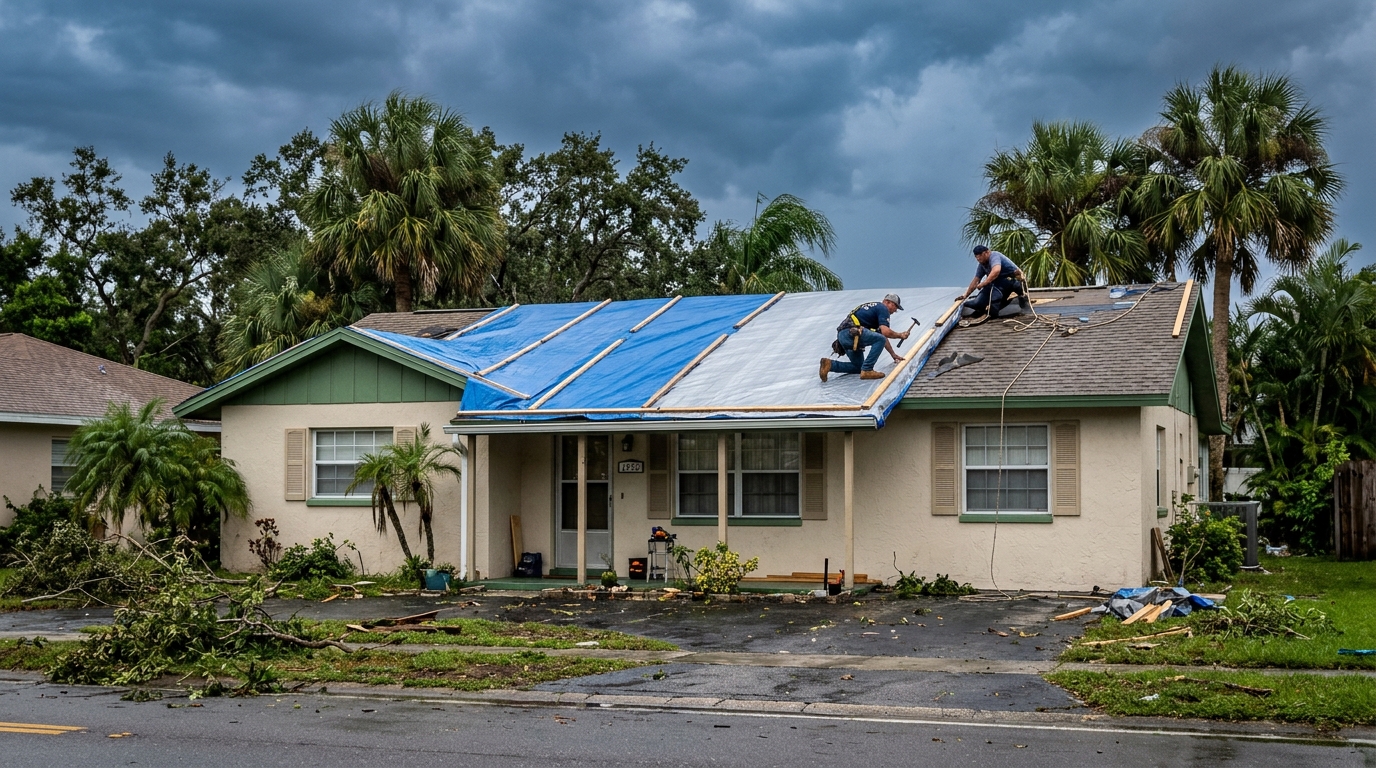
Emergency mitigation in Amherst adheres to stringent structural triage protocols designed to stop water penetration without causing collateral property damage: First, when addressing severe winter ice dams, dispatched crews deploy industrial low-pressure vapor steam machines (operating at approximately 290 degrees Fahrenheit at 250 PSI) to gently carve drainage channels through the ice. Mechanical tools such as axes, hatchets, or sledgehammers are strictly prohibited, as impact shocks fracture brittle winter shingles and punch through roof decking. Second, for storm damage and shingle blow-offs, technicians install heavy-duty 10-mil woven poly tarps secured with 2x2 kiln-dried lumber batten strips fastened directly into underlying rafter trusses. Third, active interior ceiling leaks are relieved with controlled puncture drains into catchment containment reservoirs, safeguarding structural ceilings from catastrophic collapse.
Key Technical Engineering Protocols
- Low-Pressure Vapor Steam Relief: High-temperature (290°F) steam safely channels ice dams without mechanical impact damage.
- Structural Batten Tarp Anchoring: Kiln-dried 2x2 battens screwed directly into rafters to withstand 50+ mph wind gusts.
- Interior Pressure Relief: Controlled drainage punctures prevent water weight from causing ceiling drywall collapse.
4. State Energy Efficiency Codes & Contractor Licensing Compliance
All emergency roofing and exterior envelope restoration operations facilitated through RoofExpertUSA in Amherst comply with the New York State Uniform Fire Prevention and Building Code and local Town of Amherst Department of Building Safety requirements. Dispatched independent roofing contractors maintain appropriate local contractor registrations, carry full general liability and workers' compensation coverage, and provide detailed photographic documentation to support homeowner insurance loss claims. RoofExpertUSA operates strictly as an independent referral clearinghouse; we do not employ roofing crews or directly perform roofing repairs.
Regulatory & Consumer Compliance Standards
- NYS Uniform Building Code R905: Strict compliance with mandatory ice barrier self-adhering membrane underlayments.
- Local Municipal Registrations: Independent contractors maintain active trade licenses in Erie County municipalities.
- Direct Insurance Scope Alignment: Itemized photographic logs conforming to standard carrier adjustment protocols.
5. Preventative Property Maintenance & Storm Preparedness
To safeguard Amherst properties against recurring winter ice damming and summer storm distress, homeowners should implement proactive seasonal maintenance. In autumn, ensure gutters and downspout conductors are thoroughly cleared of deciduous foliage from Amherst's mature maple and oak canopy. Have attic floor insulation inspected to achieve modern R-49 or R-60 thermal barriers, and verify that continuous soffit-to-ridge ventilation pathways are unobstructed by blown-in cellulose. During heavy winter snow events exceeding 12 inches of dense snow, utilize a non-metallic snow rake from ground level to remove the bottom 3 to 4 feet of snowpack along the eaves, leaving a thin buffer to prevent shingle granule gouging.
Long-Term Building Envelope Resilience
- Attic Thermal Balance: Maintain proper R-49+ insulation and unobstructed soffit ventilation to keep roof decks cold.
- Bi-Annual Drainage Maintenance: Clear gutters, conductor heads, and downspouts before freezing winter weather arrives.
- Non-Destructive Snow Clearing: Use poly roof rakes leaving a protective snow buffer to safeguard shingle granules.