1. Regional Microclimate Dynamics & Severe Storm Exposure in Service Areas
The Buffalo metropolitan area, encompassing Erie and southern Niagara counties in Western New York, represents one of the most meteorologically challenging roofing environments in North America. Bound by the eastern tip of Lake Erie to the southwest and Lake Ontario to the north, the region experiences severe microclimatic variations. While northern suburbs such as Amherst and Tonawanda contend with sustained high winds and freezing river fog, the legendary Southtowns snowbelt—including West Seneca, Orchard Park, and Hamburg—regularly absorbs devastating lake-effect snowstorms that can deposit 3 to 6 feet of dense, heavy snow in less than 48 hours. When severe storms strike, rapid access to vetted independent emergency roofing professionals is critical to safeguarding structural integrity and preventing catastrophic water damage.
Localized Microclimate & Atmospheric Dynamics
- Lake Erie Convective Bands: Hyper-localized snow plumes generating rapid snow accumulations with severe localized snow loads.
- Subzero Freeze-Thaw Thermal Cycling: Daily thermal swings breaking shingle seals and stressing masonry mortar joints.
- Aerodynamic Wind Funneling: High velocity wind regimes tearing unsealed shingles and lifting ridge caps.
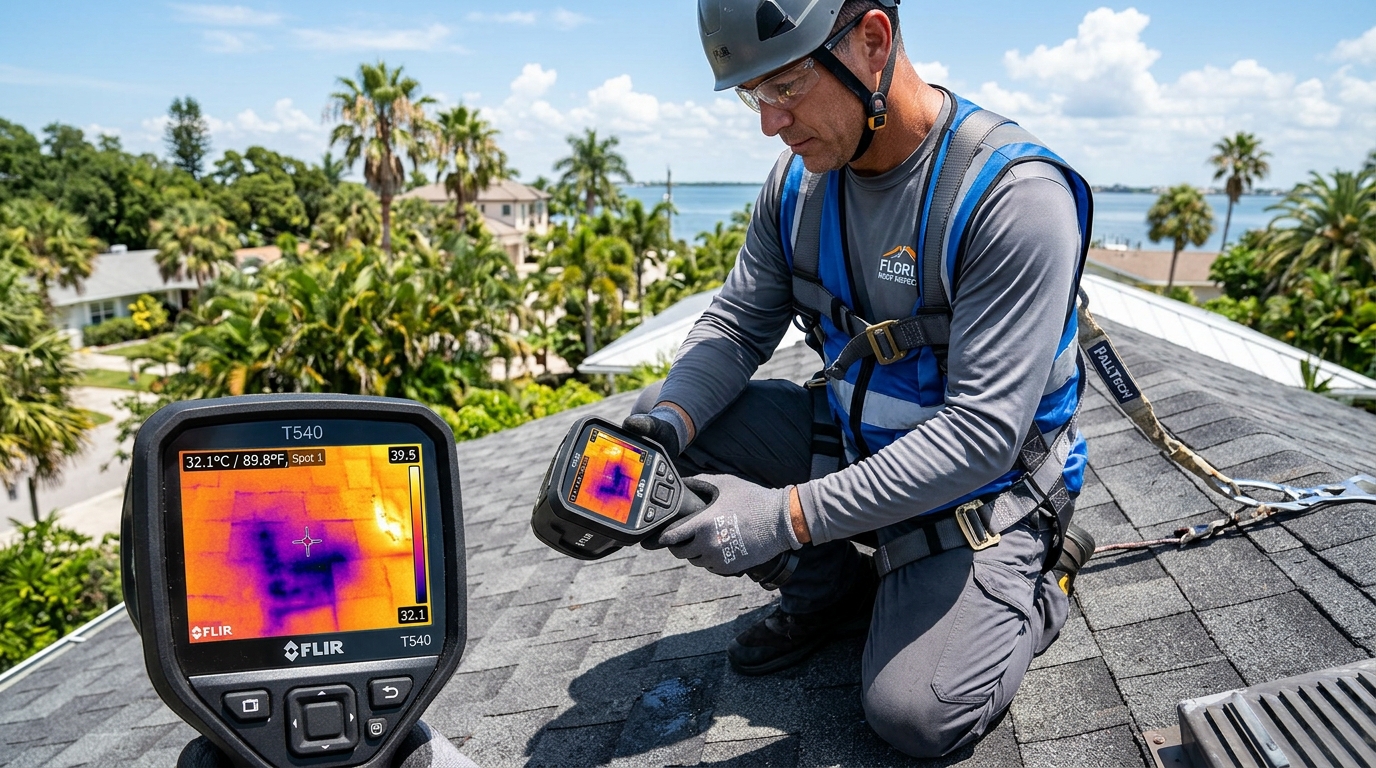
2. Non-Destructive Moisture Diagnostics & FLIR Thermal Tracing
Our emergency telephone dispatch network coordinates rapid triage across seven distinct municipal service sectors throughout Greater Buffalo. In the historic neighborhoods of the City of Buffalo (Allentown, Elmwood Village, North Buffalo, South Buffalo, and Hamlin Park), technicians navigate steep-pitch slate and architectural asphalt roofs atop century-old framing. In the suburban communities of Amherst, Cheektowaga, Tonawanda, and West Seneca, crews handle post-war ranches, cape cods, split-levels, and modern executive homes. Further east in Clarence and south in Orchard Park, large residential footprints and sprawling commercial complexes require specialized structural snow unloading and industrial-capacity low-pressure steam ice dam relief.
Forensic Diagnostic Protocols
- High-Resolution FLIR Thermal Scans: Pinpoint sub-surface moisture evaporation behind interior ceilings and walls without demolition.
- RF & Pinless Moisture Meters: Quantify substrate saturation percentages in roof decking, rafters, and attic insulation.
- Uplift & Fastener Inspection: Methodical examination of shingle nail patterns, valley transitions, and perimeter drip edges.
3. Step-by-Step Substrate Restoration Methodology
Every independent roofing contractor in our dispatch network is evaluated against rigorous technical and professional criteria before receiving emergency referrals. Contractors must demonstrate proficiency in non-destructive moisture diagnostics, utilizing FLIR infrared thermal imaging cameras and electronic moisture meters. Furthermore, crews must maintain specialized cold-weather mitigation equipment, including commercial-grade vapor steam generators (operating at 290°F / 250 PSI) that melt ice dams without damaging shingles, high-tensile 12-mil woven poly tarps, and structural batten anchoring systems engineered to resist 60+ mph Great Lakes wind gusts.
Key Technical Engineering Protocols
- Low-Pressure Vapor Steam Relief: High-temperature (290°F) steam safely channels ice dams without mechanical impact damage.
- Structural Batten Tarp Anchoring: Kiln-dried 2x2 battens screwed directly into rafters to withstand 50+ mph wind gusts.
- Interior Pressure Relief: Controlled drainage punctures prevent water weight from causing ceiling drywall collapse.
4. State Energy Efficiency Codes & Contractor Licensing Compliance
All roofing operations facilitated through RoofExpertUSA comply strictly with the New York State Uniform Fire Prevention and Building Code and respective municipal building departments across Erie County, including Buffalo's Department of Permit and Inspection Services, Amherst Building Department, Cheektowaga Building Department, and Tonawanda Building & Code Enforcement. Dispatched independent contractors hold all required municipal trade licenses, carry active general liability and statutory workers' compensation insurance, and provide transparent written estimates conforming to industry-standard insurance loss documentation. RoofExpertUSA operates strictly as an independent referral clearinghouse; we do not employ contractors or perform repairs directly.
Regulatory & Consumer Compliance Standards
- NYS Uniform Building Code R905: Strict compliance with mandatory ice barrier self-adhering membrane underlayments.
- Local Municipal Registrations: Independent contractors maintain active trade licenses in Erie County municipalities.
- Direct Insurance Scope Alignment: Itemized photographic logs conforming to standard carrier adjustment protocols.
5. Preventative Property Maintenance & Storm Preparedness
Property owners throughout Western New York should establish an ongoing relationship with emergency roofing resources before severe weather strikes. Annual pre-winter roof assessments, bi-annual gutter clearing, professional attic insulation inspections to achieve R-49+ thermal efficiency, and proactive tree canopy pruning are essential defenses against Lake Erie's unpredictable storms. When severe weather causes unexpected envelope failure, our 24/7 central telephone dispatch desk stands ready to connect you immediately with experienced local professionals.
Long-Term Building Envelope Resilience
- Attic Thermal Balance: Maintain proper R-49+ insulation and unobstructed soffit ventilation to keep roof decks cold.
- Bi-Annual Drainage Maintenance: Clear gutters, conductor heads, and downspouts before freezing winter weather arrives.
- Non-Destructive Snow Clearing: Use poly roof rakes leaving a protective snow buffer to safeguard shingle granules.